
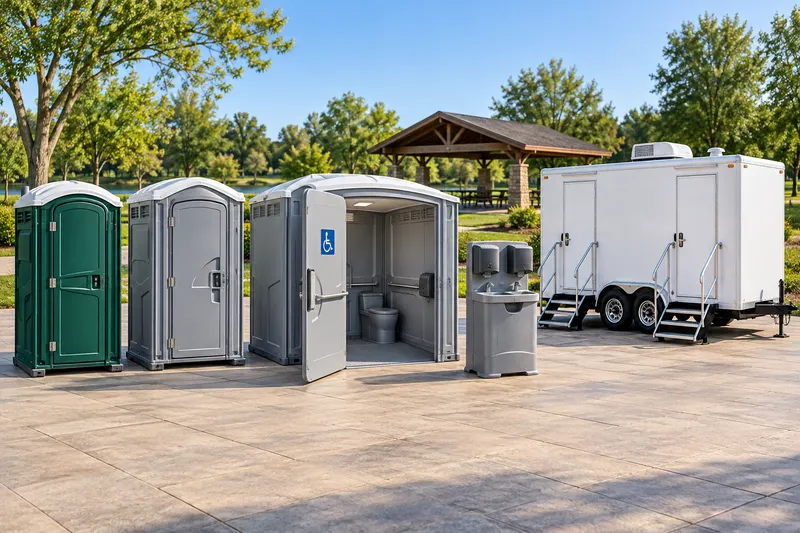
Select temporary facilities for the actual activity
A standard portable toilet is a straightforward starting point for many markets, outdoor events, work areas, and gathering spaces. An accessible unit may be appropriate when a more accessible restroom is needed and the site can provide a usable route. Handwashing stations can support hygiene near food, restrooms, or shared activity areas.
For a hosted event, discuss the user experience, schedule, and placement constraints before choosing upgraded or event-oriented equipment. The actual equipment request should reflect the site and user needs, not an assumption that every vendor or guest has access to the same facilities.
- Standard portable toilets for general temporary use
- Accessible options and route considerations
- Handwashing near food or high-use areas
- Event equipment for guest-focused occasions
Treat market utilities, sanitation, and waste as separate needs
Springhill Farmers Market’s published 2026 vendor guidelines state that electrical outlets are limited and identify vendor equipment that must be self-powered. The same guidelines place responsibility on prepared-food vendors to provide their own trash containers and remove their waste.
Limited outlets do not establish that a proposed piece of equipment can be powered, and vendor waste removal does not replace a restroom or handwashing plan. Confirm current market instructions with the program before arranging any generator, utility connection, toilet, handwashing unit, or other site equipment.
- Whether vendor equipment must be self-powered
- Current organizer approval for any utility or equipment plan
- Vendor trash containers and waste removal responsibilities
- Separate restroom and handwashing requirements
- Provider access for delivery and collection
Confirm setup, access, and service arrangements
Obtain approval for the equipment location from the event organizer or property operator. Share the exact setup area, surface conditions, vendor layout, crowd routes, parking restrictions, and any gate or time restrictions. The placement should remain practical for users and reachable for delivery, agreed servicing, and collection.
If the event spans multiple days or the layout changes, identify who can update access instructions. Keep the approach clear of vendor displays, parked vehicles, and temporary barriers at the times equipment must be handled.
- Event location and approved placement area
- Dates, operating hours, setup, and teardown schedule
- Vendors, guests, workers, and food activity
- Vehicle access, parking, gates, and obstacles
- Current site contact and collection contact
Request a quote with the useful site details
A useful request describes the event, precise site, duration, expected users, vendors, existing facilities, and the equipment being considered. Include any utility question as a site condition to verify, rather than assuming power or water is provided.
The quotation discussion can address applicable equipment, delivery, supplies, handwashing, service coordination where appropriate, and collection. Event approval, utilities, and vendor waste responsibilities should be confirmed with the relevant organizer or property operator.
- Site, event, and vendor details
- Duration and operating schedule
- Restroom, accessibility, and handwashing interests
- Existing facilities and utility conditions
- Approved placement, access instructions, and contacts
Questions before you book
Can market electricity support my proposed equipment?
Do not assume it can. Springhill Farmers Market’s published guidelines say outlets are limited and identify equipment that must be self-powered. Confirm current organizer instructions and approval for the proposed equipment.
Who is responsible for vendor waste and handwashing?
The published guidelines say prepared-food vendors must provide their own trash containers and remove their waste. Handwashing and restroom needs should be planned separately according to the activity and site requirements.
What should I confirm before arranging portable facilities?
Confirm the current event rules, approved placement, dates, user groups, existing facilities, vehicle access, utility conditions, and the contacts responsible for setup and collection.