
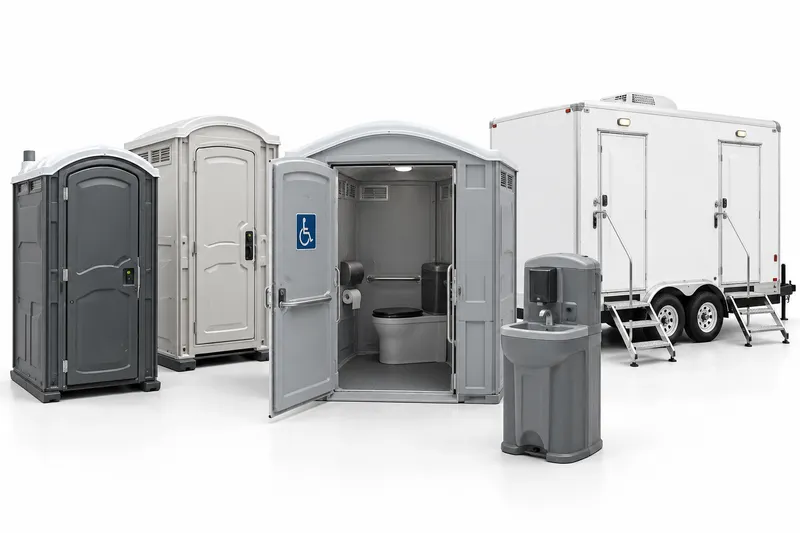
Choose equipment for the activity and people using it
Standard portable toilets can serve as the core restroom arrangement for outdoor gatherings, project areas, and temporary work locations. Share who will use them, when activity occurs, how long it lasts, and whether the site already has facilities available to the group.
An accessible unit provides a roomier temporary restroom option, but it should be paired with an actual route that people can use. Handwashing stations add washing capacity alongside toilets and can be useful near food, registration, activity areas, or work zones. Event, deluxe, or trailer-style options may be discussed where the planned use and site conditions support them.
The requested model and availability are confirmed for the particular rental discussion.
- Standard portable toilets for core temporary restroom needs
- Accessible units where a more accessible option and usable route are needed
- Handwashing stations alongside toilets
- Event and upgraded options for appropriate gathering plans
Inspect the full route, not one feature
Caddo Parish reported playground access improvements, accessible picnic tables, and inclusive play equipment at William Peters Town Park in an August 2024 update. Those reported improvements are a useful reminder to look at the complete route for a temporary restroom plan: the approach from parking or gathering space, surface changes, turns, slopes, and the proposed unit location.
That report is not a current inspection or certification of every route at the park, and a park improvement does not establish whether a specific temporary-unit location is suitable. For a park or other managed property, confirm current conditions and approval with the property operator before settling on placement.
The same route review is useful at private homes, worksites, fields, and event properties. Consider the user path as well as the delivery and service-vehicle approach.
- Path from arrival or activity space to the proposed unit
- Surface firmness, slope, drainage, turns, and obstructions
- Placement area large enough for the selected equipment
- Vehicle route, gates, overhead conditions, and access procedures
- Property approval for the exact proposed location
Coordinate placement, use period, and collection
Choose an approved placement area with a stable surface and a route that remains workable for delivery, users, planned service, and pickup. Identify locked gates, event fencing, parking conflicts, restricted work areas, and the person who can provide access if needed.
Tell the rental coordinator whether the need is a short gathering, an active project, or a longer period of use. Longer arrangements may need planned service access and supply coordination; short events still need a collection plan once attendees leave and site cleanup begins.
Do not move equipment to a new location without coordinating first. A change can affect the ground conditions, property permission, service route, and collection process.
- Approved placement and site-contact details
- Dates, operating hours, or expected project duration
- Gate, parking, and vehicle-route information
- Supply and servicing needs for the agreed use period
- Clear pickup access after the activity or project phase ends
Prepare a Greenwood quote request
For a useful quote discussion, provide the actual location or address, the placement and access route, expected users or attendance, dates or duration, activity type, surface conditions, existing facilities, and a site contact. For an event, add the schedule, food or vendor activity, and venue approval status.
Local planning information does not confirm that an address can be served. The proposed equipment arrangement and availability should be confirmed for the specific request.
- Actual address or named property
- Attendance, crew size, or expected users
- Event schedule or project duration
- Proposed unit location and surface
- Delivery, service, and pickup route
- Property or venue contact and approval details
Questions before you book
How do I assess access to an accessible restroom location?
Review the entire expected user route and the exact placement area, including arrival points, surface changes, slopes, turns, obstructions, and room to approach the unit. Confirm the location with the property operator where applicable.
Do reported park accessibility improvements confirm a temporary restroom location is suitable?
No. The reported William Peters Town Park improvements concern specific park features and do not certify a complete current route or a proposed portable restroom placement. Confirm present conditions and property approval for the actual site.
What site conditions should I describe?
Describe the placement surface, drainage or slope, route from activity areas, gates, turns, overhead obstacles, parking, access controls, existing facilities, and whether the layout could change.
What equipment choices suit a gathering or work area?
Standard toilets are often the base arrangement. Accessible units, handwashing, and upgraded event options can be considered based on users, duration, site route, food activity, guest expectations, and confirmed availability.